Friday, 20 December 2013
Theatre and Peacebuilding - Ana Correa, Peru
Since my return from Kenya in April, I've been traveling and continue to explore the role of women in community healing. I recently came across the work of Ana Correa from Peru and her exploration of identity and personal narrative through the use of theatre. She reconstructs and violence of the 1990's civil war in Peru in which 70,000 people were tortured, executed or disappeared. During her performances, she sometimes recognizes women in the audience who are characters in her plays, who have suffered the loss of their sons to violence, but they encourage her to continue in order to share their story with others. It is one thing to know a statistic, quite another to know an individual and it is this personal story she is sharing through her theatre. She explains that "the essence of being is in the encounter" reflecting the role of women who by engaging with one another in conversation, at the watering hole or shop, they discover their shared histories.

Friday, 29 March 2013
The Many Roles of Women in Healing Community
For the past three months I have been traveling throughout Kenya and Uganda exploring the role women play in community healing/peace-building.
My questions to them were:
What words would you use to describe peace?
How do you know when there is peace in your homes/community?
What do you do to build peace in your home/community?
What follows are some examples of what I was told by the women I met in both rural and urban settings. What you hear is the women singing prayers at the start of the meeting. Singing is very important in Kenya and is used as a ritual to bring calm and ease tension in difficult times. There are many different voices, many stories, many lives, many conflicts - coming together with one voice! Unity, Love and Calm - these three words were used most to describe what peace means to these women.
My questions to them were:
What words would you use to describe peace?
How do you know when there is peace in your homes/community?
What do you do to build peace in your home/community?
What follows are some examples of what I was told by the women I met in both rural and urban settings. What you hear is the women singing prayers at the start of the meeting. Singing is very important in Kenya and is used as a ritual to bring calm and ease tension in difficult times. There are many different voices, many stories, many lives, many conflicts - coming together with one voice! Unity, Love and Calm - these three words were used most to describe what peace means to these women.
view on youtube at http://youtu.be/AHxXW5iPtx8
Sunday, 24 March 2013
Samburu women
I will not be updating my blog for a couple of weeks as I will be spending the time pulling together all I have been learning, seeing and experiencing over the past few months in Kenya and Uganda.
In the meantime, a few more images to wet your appetite and consider the role of women in community healing
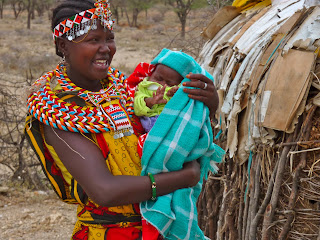 Mother and child, Samburu
 A meeting with the women of Unity Village

In the meantime, a few more images to wet your appetite and consider the role of women in community healing


And now I begin to wrap up my journey here, to write, to try to make sense of it all.

I have been humbled by the generosity of all whom I have met and worked with both in Kenya and Uganda.
Asante Sana
Sunday, 17 March 2013
A few women who heal community quietly
Here are some photographs of some of the women whom I have met and who
offer strength and support to others. So far I have met over 550 women,
many of whom have shared their stories with me and who have been kind
and generous. I have spoken about some other women in other posts but
these are a few more.


She was imprisoned herself and now helps women in prisons by rescuing
any children left behind when an arrest is made, encouraging and
supporting the women while imprisoned and meeting them upon their
release. She is caring for six children in her own home and is often
called in the middle of the night by inmates about to be released.

These three women are all from the Gulu area of Uganda and now live in
an IDP camp on the grounds of a prison in Kampala. They are supporting
one another emotionally and trying to find peace after losing family,
suffering through poverty, and enduring spousal abuse.
Friday, 15 March 2013
Where can a Woman find Peace in Poverty?
If a woman sees a stick for beating her rival, she will throw it away in the woods.
(Ugandan Proverb)
How can women find peace when they have no food, little clothing, lack fresh water and access to medical treatments, have too many babies to enable them to have a restful sleep, and suffer through their husbands drink and violence? The above proverb reflects the sense of community support that seems to be throughout Uganda and acts as a way through which women survive upheaval.

Throughout my time in Kenya and Uganda I met with over 500 women each time asking How do you know when there is peace? This day, in Luzeria Prison Jennifer spoke on behladf of the women. She explained . . . "We can know there is peace when families are together, we are happy, children and together. You know where to sleep and your children are going to school. You are a woman needs to have something to do. The husband does not bring in much money. We cannot have enough the child works barefoot, clothes are not enough. We are just here with no place to go. We know there is problem when people sleep in the bush. We don't have peace. We the women find we have children, their parents have died, but we cannot help them. Kony's people took them in the bush and made them into soldiers. Our hearts are not content. The men feel the peace they can find is to drink. After they drink they start beating us women up. Because of worries we develop ulcers because there is no peace. There is nobody who can help us so we cannot find peace". They embody their experience of violence.

Thursday, 28 February 2013
Widows' Village Tepesua
The notion of peace-building is broad. At its best, it involves diverse
processes that contribute to building positive relationships, healing
wounds, reconciling differences, restoring self-esteem, rebuilding communities,
instilling feelings of security, and empowering agency. This past week, I visited one place that is a manifestation of peace-building.
Tepesua is a widows' village on the road between Narok and Maasai Mara Game Reserve. It was established by Hellen Nykuraiya a Maasai woman who at the age of nine years, underwent female genital mutilation (FGM), was married at 11 years to a man much older than herself, and ran away to finish her education. She was shunned by her family and community. Within her cultural traditions she will never be allowed to remarry, nor has she any rights to inheritance. (Below is a photograph of Hellen and some of the other widows in Tepesua).

Early marriage is common in this community and girls are frequently traded for two or three cows and are not able to return home unless with the cows (and any of their offspring) are also returned. Due to the large age gap between husband and wife, women are widowed very young and have no inheritance rights - frequently cast out by the husbands relations leaving them to fend for themselves. But with no education, they have little skills to support their children and frequently turn to working in the sex trade to put food on the table. Hellen purchased some land and has created a village for widows to live who have been widowed or cast out by their families in some other conflict.
Hellen adheres strongly to her Maasai culture but believes even more strongly that giving a girl an education is important. FGM is a typical practice and a right of passage into womanhood in the Maasai community. Although illegal in Kenya it is still promoted by mothers and grandmothers throughout the country. It is a part of the culture. Hellen has begun to reconcile differences within the community by opening a boarding school where girls who have been brought to the authorities can live free from fear of FGM and early marriage. The children wear school uniforms on Mondays and Fridays and the rest of the week, they wear traditional Maasai clothing - a balance between traditional culture and new ideas of educating girls. To help with conflict within the community about what she is doing, the "rescue centre" is known as a school inviting boys in as well as girls. The only difference between the girls who are rescued and the other children is those rescued continue to live at the school when there is a break. Returning home would result in their circumcision and early marriage.
Here are some of the children walking to school in traditional Maasai clothing . . .

And some of the rescued girls in school uniform
 By providing these girls with an education and by challenging the traditions of her community the girls will gain agency, self-esteem while at the same time, instill knowledge and respect for their culture.
Tepesua is a widows' village on the road between Narok and Maasai Mara Game Reserve. It was established by Hellen Nykuraiya a Maasai woman who at the age of nine years, underwent female genital mutilation (FGM), was married at 11 years to a man much older than herself, and ran away to finish her education. She was shunned by her family and community. Within her cultural traditions she will never be allowed to remarry, nor has she any rights to inheritance. (Below is a photograph of Hellen and some of the other widows in Tepesua).

Early marriage is common in this community and girls are frequently traded for two or three cows and are not able to return home unless with the cows (and any of their offspring) are also returned. Due to the large age gap between husband and wife, women are widowed very young and have no inheritance rights - frequently cast out by the husbands relations leaving them to fend for themselves. But with no education, they have little skills to support their children and frequently turn to working in the sex trade to put food on the table. Hellen purchased some land and has created a village for widows to live who have been widowed or cast out by their families in some other conflict.
Hellen adheres strongly to her Maasai culture but believes even more strongly that giving a girl an education is important. FGM is a typical practice and a right of passage into womanhood in the Maasai community. Although illegal in Kenya it is still promoted by mothers and grandmothers throughout the country. It is a part of the culture. Hellen has begun to reconcile differences within the community by opening a boarding school where girls who have been brought to the authorities can live free from fear of FGM and early marriage. The children wear school uniforms on Mondays and Fridays and the rest of the week, they wear traditional Maasai clothing - a balance between traditional culture and new ideas of educating girls. To help with conflict within the community about what she is doing, the "rescue centre" is known as a school inviting boys in as well as girls. The only difference between the girls who are rescued and the other children is those rescued continue to live at the school when there is a break. Returning home would result in their circumcision and early marriage.
Here are some of the children walking to school in traditional Maasai clothing . . .

And some of the rescued girls in school uniform

Monday, 18 February 2013
Re-storying narratives evolved into a shared vision
I want to talk to you about the symbols the women chose for their images of peace. The majority of Kenyans are very patriotic and the images the women chose to paint and embroider reflected this patriotism - symbols that focused on the unity of Kenyans - going beyond tribal difference. As one woman said this election must stand for "one Community, one Nation, one Kenya".
 A couple of images focused on home and broken hearts but for the majority, as you can see in the photograph, the predominant image was the Kenyan flag as it's symbolism is important to the notion of peace: Green reflecting the abundant fertile soil; red reflecting the blood shed in the fight for independence; black representative of the colour of the people; white is a symbol of peace and unity.
When the women worked together on the final section of the work on paper - their Hopes and Dreams for the future - there was much discussion about their desire for a stronger infrastructure than currently exists within their community. They drew many hospitals, toilets, schools, transportation such as railways and roads, but they also drew flowers that they said represented new beginnings and unity - very important concepts to them all. The images and words they chose reflected a shared vision of a community that is united and peaceful.

By reflecting on their past and on how their communities were before the violence, they were able to bring forward their experiences and reflect on how those experiences have informed their desire for peace and their strong advocacy. Each narrative, rather than ending with discussions around their victimization, vehemently reflected their understanding of themselves as triumphant and their desire that, as women, they could make a difference in their communities - teaching their sons about peace , and standing strong together in the upcoming election.

When the women worked together on the final section of the work on paper - their Hopes and Dreams for the future - there was much discussion about their desire for a stronger infrastructure than currently exists within their community. They drew many hospitals, toilets, schools, transportation such as railways and roads, but they also drew flowers that they said represented new beginnings and unity - very important concepts to them all. The images and words they chose reflected a shared vision of a community that is united and peaceful.

By reflecting on their past and on how their communities were before the violence, they were able to bring forward their experiences and reflect on how those experiences have informed their desire for peace and their strong advocacy. Each narrative, rather than ending with discussions around their victimization, vehemently reflected their understanding of themselves as triumphant and their desire that, as women, they could make a difference in their communities - teaching their sons about peace , and standing strong together in the upcoming election.
Subscribe to:
Posts (Atom)