Showing posts with label arts and community healing. Show all posts

Saturday, 25 October 2014

Art for Social Change: A personal tale

In February 2005, I was invited  to work in the north of Sri Lanka with orphans and victims of the tsunami and twenty year war. My goal to was find way of creating art and rituals with them, that would offer ways to make sense of their experiences and to rebuild their community. During my five weeks as a guest of Tamil nuns I engaged with approximately 1000 women, children and men who had lost their families, homes and hope when the tsunami hit.


The Tamils say the Tsunami (26 December 2004) is the second disaster for them, the first being the civil war.

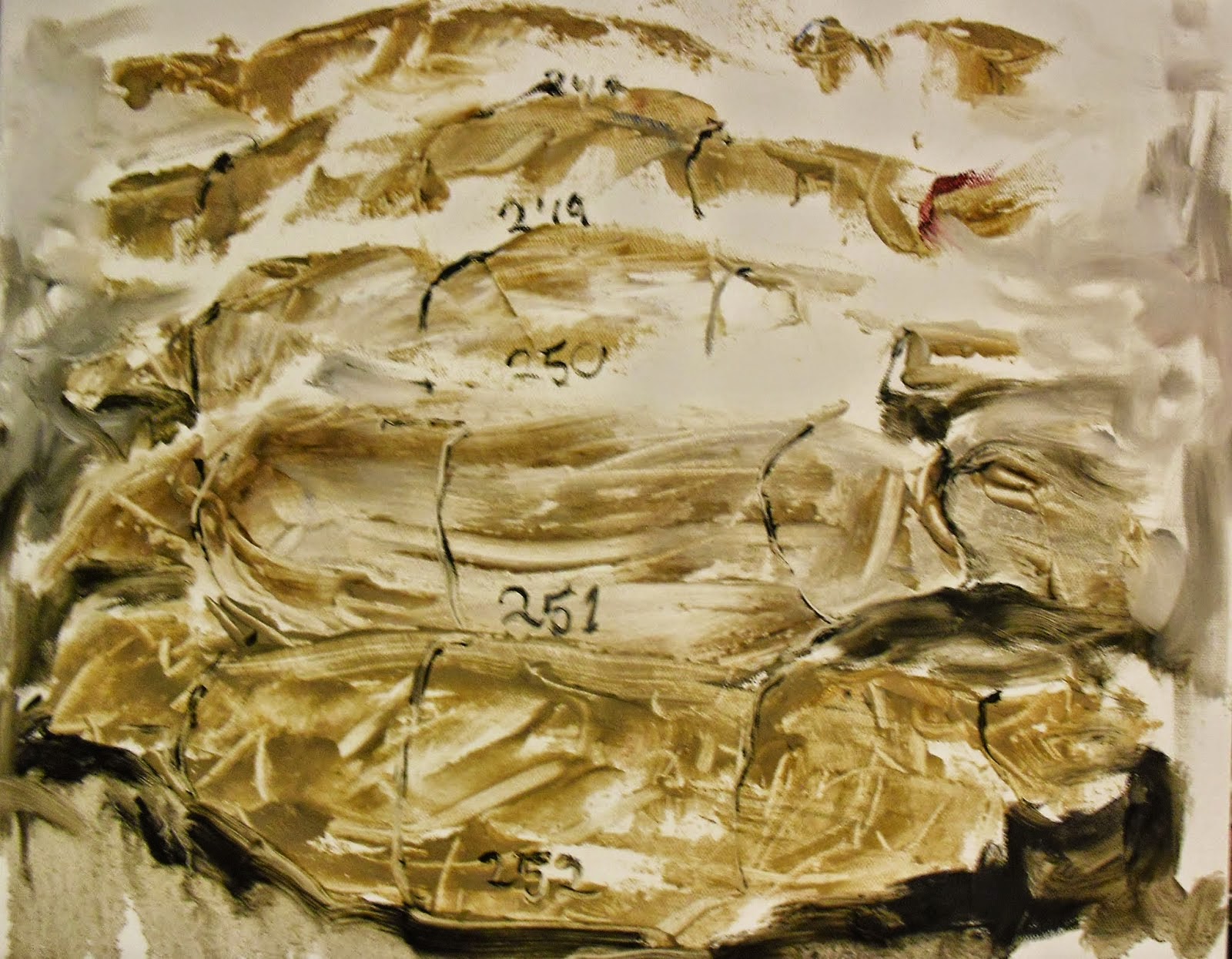
While there, I visited Mulliativu, a town on the Jaffna Peninsula in which 5,000 of the 25,000 souls were taken by the sea. Many of the women and nuns, who offered support and counsel to those survivors, created works of art that reflected their own personal narrative of loss.


In 2009, I was invited to submit a poem to a website that was raising awareness about global warming. My response was inspired by the painting (above) and by my experience so soon after the tsunami as it is believed that human induced global warming causes extremes and frequency in weather events such as tsunamis and flooding and continues to devastate people's loves throughout the globe.

Oh green, lush Sri Lanka -
"Teardrop of India" -
the world weeps for you, and leaves
unwanted salt-water tears
to flush away memories.

Such betrayal from Mother Ocean.
Once nurturing and generous,
a deep rumbling within her womb,
angered her to rise and lash out at your people,
for whom loss is not foreign.

Surviving Fisher-folk!
Cast your nets around her waist,
hold tightly for fear of being lost
and wail for those bodies held
deep within her grasp.    

©Sarah Dobbs 2009


Thursday, 9 October 2014

Cycles of Art and Healing

I just came across a blog titled Warscapes There is an article by Melissa Smyth entitled "Cycles of Art and Healing by Syrian Refugees" in which she takes us through the experience of a young Syrian artist, Soulaf Abas , who is working with Syrian refugees along the border of Jordan.


She listens to their stories and records them through paintings and drawings (as above). In doing so she is acting as witness to the refugees broken narratives, giving them a voice, and allowing them to move beyond the silence of their suffering.

Friday, 29 March 2013

The Many Roles of Women in Healing Community

For the past three months I have been traveling throughout Kenya and Uganda exploring the role women play in community healing/peace-building.

My questions to them were:
What words would you use to describe peace?
How do you know when there is peace in your homes/community?
What do you do to build peace in your home/community?

What follows are some examples of what I was told by the women I met in both rural and urban settings. What you hear is the women singing prayers at the start of the meeting. Singing is very important in Kenya and is used as a ritual to bring calm and ease tension in difficult times. There are many different voices, many stories, many lives, many conflicts - coming together with one voice! Unity, Love and Calm - these three words were used most to describe what peace means to these women.
view on youtube at http://youtu.be/AHxXW5iPtx8


Monday, 12 November 2012

Community Healing and the Arts: A case study


In 2004, ten years after the Rwandan Genocide, Lily Yeh visited  Giseyena, Rwanda by way of an invitation of a local Red Cross representative. There, she was shown two sites: a mass grave covered by a crumbling structure and a nearby village where genocide survivors lived.

From 2005 to 2007 Lily Yeh and the Barefoot Artists worked with nearly 100 women, all survivors of the genocide, and several hundred children, volunteers from neighbouring cities and the US. Together, they created a memorial garden that honoured those who died in the genocide, and painted murals on the houses of the villagers - transforming a desolate area, into one that was welcoming and uplifting. The project illustrates the benefits of using the arts as a vehicle for community healing and the transformation that care is given in creating personal environments.

This short clip from a documentary by Chris Landy reflects the power bringing the arts into a community has had on restoring a sense of peace.


Sunday, 21 October 2012

Peace and strategic arts-based practice

In 1969 I was a child living in the Republic of Ireland when the Troubles started again in Northern Ireland. My grandmother lived in Belfast at the time, and my father would drive us there to visit her. When we came to the border, we were met by heavily armed border militia and the streets of Belfast were filled with trucks. The fear was palpable.

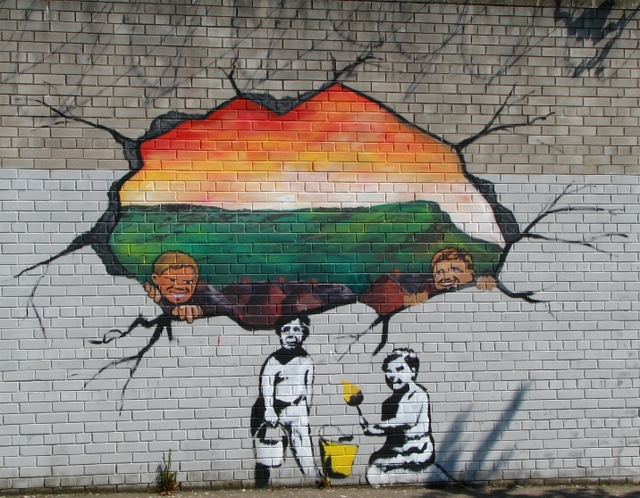
In response to the violence, artists created murals to either commemorate events or to communicate their hope for peace. The majority of the murals which were created along Falls Road and Shankill Road in Belfast reflect either the republican or loyalist political beliefs. When looked at together, they tell a tale of hardship and violence, but also of hope. For instance, murals depicting the 1981 hunger strike during which ten people died drawing international attention, commemorate the event. The leader of the hunger strike was an IRA member called Bobby Sands, his election into parliament gained international attention before his death. In fact, the hunger strike radicalised nationalist politics, and was one of the driving forces that enabled Sinn Féin to become a mainstream political party.


So, whether to advocate for peace or engage people in the struggle for justice, murals play an important role in mediating social change. In the case of the murals in Northern Ireland, the arts were not only used in an non-violent activist way, but also as a means to build peace and heal the community. Artists can raise awareness of latent local issues - or issues that are at the forefront of everyone's mind. Another example would be the the murals painted by Diego Rivera illustrating the repressed worker. These murals reflect not only Rivera's own communist leanings but also the political upheaval of the times and raised awareness of their struggle.

I find myself reflecting on this as I am very interested in the use of arts as a tool to facilitate community healing. The murals in Northern Ireland and Mexico City, the arts, were created as a means of public pedagogy and non-violent activism raising public awareness of issues and increase understanding and sympathy of others. At other times  the arts may be used as a means towards gaining solace. In Kenya during the Truth and Reconciliation Commission, song was used when a particularly violent testimony was heard. Song, in this instance, seems to have been not only therapeutic for the audience of the Commission who had just acted as witnesses by listening to stories of human rights violations, it appears to have eased the stress for the witness and the commissioners.

So in order for arts to be used in a productive way during community healing, it important for to reflect on when to use the arts, in what instance to use them (consider environment) and what artistic medium is best suited for what situation. So really, the what, the when and the how are important considerations when using the arts in peace building approaches.